
Ask most operators how AI fits into their business and the conversation defaults to a replacement question. Which jobs does it take over? Which parts of the guest journey can now run without a person?
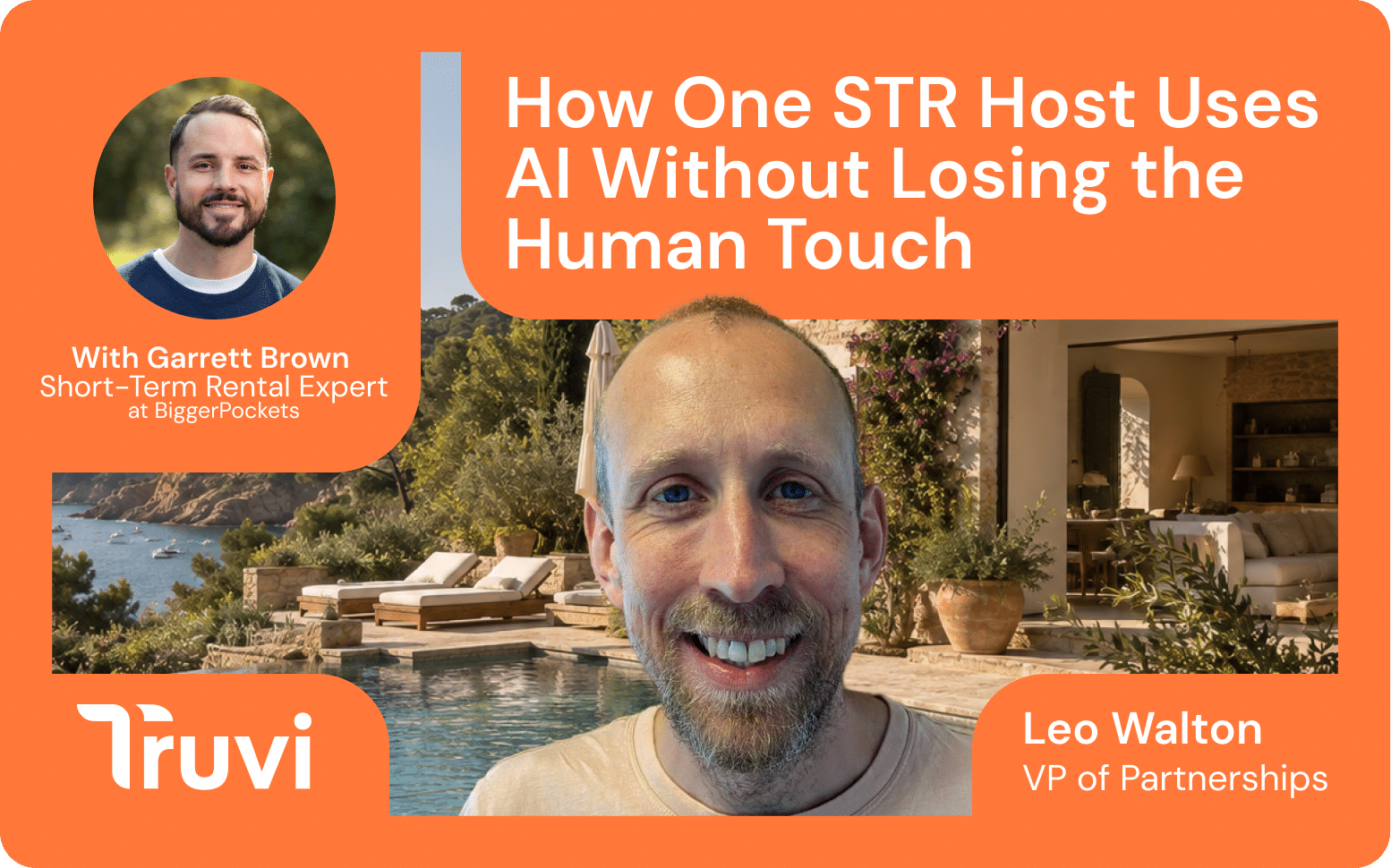
Garrett Brown, who runs Cameron Ranch Glamping and is Bigger Pockets‘ resident short-term rental expert, doesn’t frame it that way. “We’re human-led, AI-assisted,” is how he put it when I spoke with him recently on The Check-In podcast. The rest of this piece walks through what that means in practice, across guest messaging, internal ops, and content.
The chatbot’s job isn’t answering questions
Cameron Ranch does roughly 90% of its bookings direct, driven by a strong social media presence. That volume creates a problem most direct-booking operators eventually hit: you can’t staff a live person on the website around the clock, but a slow reply loses the booking.
Garrett’s chatbot is trained well enough that most visitors think they’re talking to a person. But its actual job isn’t to be convincing. It’s to get a phone number and hand the conversation off fast.
“What happens immediately after that is we have AI triggers send to my team, and my team will immediately call that person,” he said. “From the chat to the call usually takes about three minutes tops.”
The AI isn’t closing the booking. It’s compressing the gap between a guest’s interest and a real person picking up the phone, the moment that used to get lost to a “someone will be in touch” web form.
Want to hear the full conversation?
This article is based on an episode of The Check-In podcast, where Leo Walton and Sarah Nan DuPre talk with the people shaping the short-term rental industry.
Listen on YouTube, Spotify, or Apple Podcasts.
The daily reports nobody has to compile
Garrett built internal daily reports, using Claude Code, that go out to his team’s group channels automatically: “what the turnovers look like for today, what’s the weather like… are there any bookings that maybe haven’t put their ID verification in, are there any that haven’t paid the rest of their booking.”
Before, someone checked twenty-odd bookings manually for exactly this. “That’s helped my employees become more efficient because they don’t have to go through 20 different bookings” every day, he said.
The freed-up time, in his telling, goes toward the things that actually set his properties apart: personalised welcome boards referencing a guest’s occasion, staff whose job is partly to learn as much as possible about who’s arriving, and a custom AI-generated song written for guests celebrating something specific, sent ahead of their stay. “So many people thought it’s a real song,” he said. “That was amazing… this is our theme song coming to the glamping site.”
Six to eight hours down to minutes
The third place AI shows up is content. Garrett feeds his own past listing descriptions into an AI tool to generate new ones, a job that used to take six to eight hours per listing, now done in minutes, by his account. He runs SEO audits the same way, describing the output as blunt and specific: “Hey, you’re at 70%. Do these six things and you’ll bump up to 85%.”
He’s clear about the limit. “It will never take away that it always comes with human oversight and touch,” he said. The tool tells him what to check. He still decides what the listing actually says.
What this is actually an argument for
Take Garrett’s account at face value and it cuts against the two most common reactions to AI in hospitality: treating it as a threat to the personal service that makes short-term rentals work, or leaning on it so hard the personal service disappears.
His version sits between those. Let AI absorb the repetitive, checkable work, a missing payment, a first draft of a description, a website visitor about to leave, and the humans on the team spend more time on what was never going to be automated anyway: noticing what a guest actually needs and following up in a way that builds the kind of relationship that, he says, gets a quarter of his bookings through referrals.
Whether that pattern holds for a smaller operation without Garrett’s build-it-yourself approach to tooling is a fair question. But the underlying shape of it, using AI as a filter that clears space for the human parts of the job rather than as a substitute for them, holds up regardless of scale.
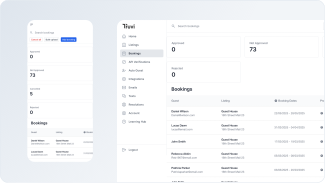
Truvi’s screening runs on a similar logic. Watchlist checks, email verification, and phone validation happen automatically on every booking, with results appearing immediately as Approved, Flagged, or Rejected, so the judgment calls that matter, what to do about a flagged guest, how to handle a borderline case, are the ones your team actually spends time on.
Let AI handle the checks. Your team can handle the guest.
Truvi’s screening runs automatically on every booking, so your team’s time goes toward the calls that actually need a person.