
A few years ago, I caught myself doing something I hadn’t noticed before. I was talking about my properties and I said “my Airbnbs.” Not my short-term rentals. Not my portfolio. My Airbnbs.
Somewhere in San Francisco, there’s a man in a very expensive fleece who has never met me, doesn’t know my name, and has somehow ended up with his brand name on my assets. That should bother me more than it does.
It bothered me enough to start paying attention. And once you start, you can’t stop.
The most seductive pitch in hospitality history
The platforms arrived with something that felt like liberation. List your property. Be your own boss. Easy money. Independence without infrastructure. Success without sacrifice.
We fell for it, myself included, because the pitch was genuinely brilliant. They solved a real problem. They gave millions of people access to a global marketplace they couldn’t have built themselves. For a while, it was everything they said it was.
But the trade-off was buried in the experience, not the terms and conditions.
I was at a conference talking to a host who had been running 15 properties for six years. Everything about her business sounded impressive: the occupancy rates, the reviews, the systems she had built. I asked her a simple question: Could she contact her guests directly right now, without going through a platform?
She stopped and something shifted on her face. Not embarrassment but recognition that six years and 15 properties, with over a thousand guests and close to a million pounds in revenue, and she didn’t own a single customer relationship.
What they actually own
When people talk about what the platforms take, commission is the number that comes up most. 20% hurts, but it’s visible, expected, and to some extent factored in.
The less discussed cost is structural.
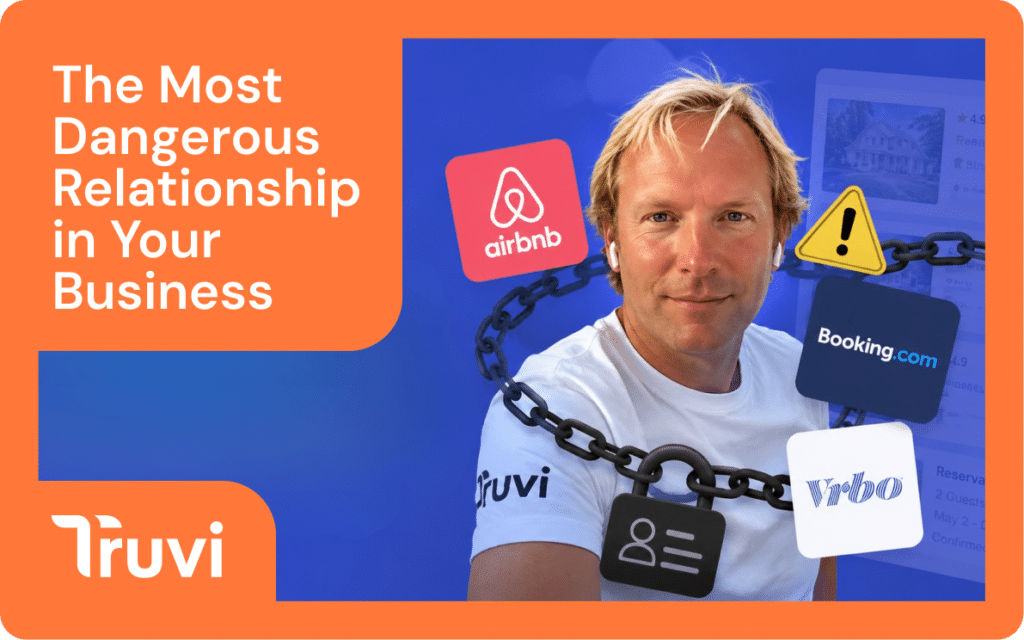
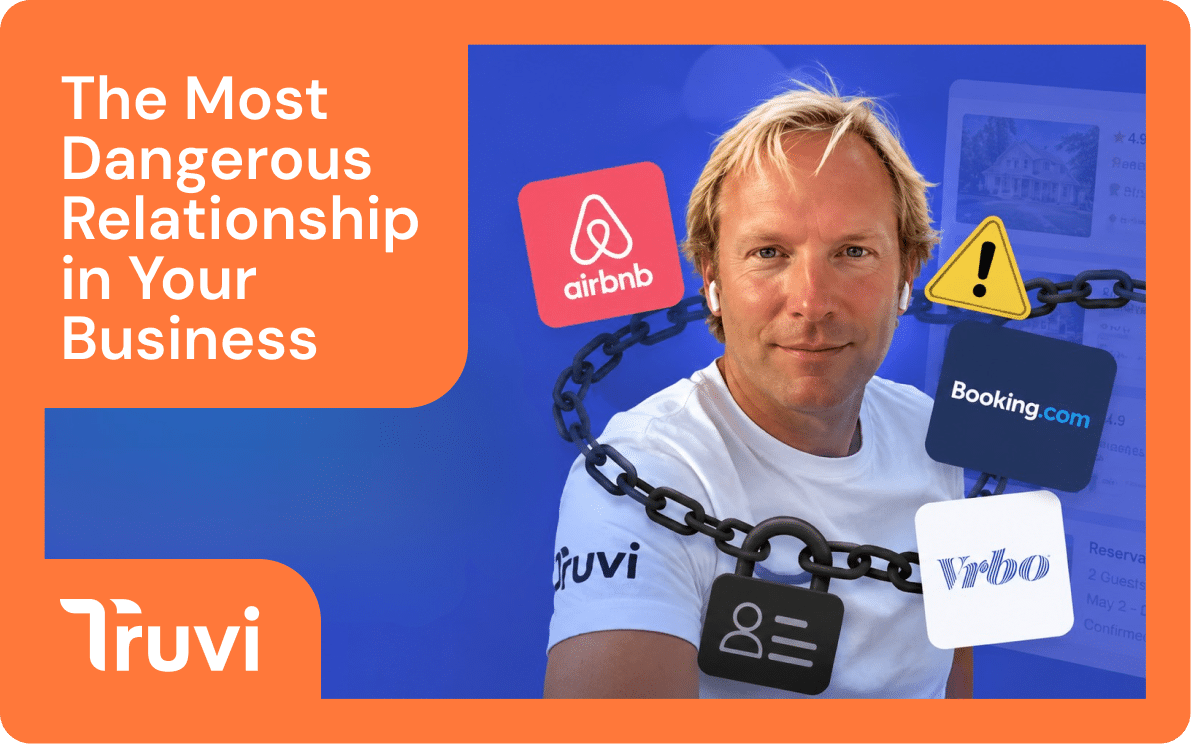
They own your guests, control your visibility, and dictate cancellation policy, your review score, your Superhost status. Things you built over years, they can adjust overnight. Every exceptional stay you deliver builds their reputation as much as yours, arguably more. And if you step out of line, question a decision, fall on the wrong side of an algorithm, receive a complaint you had no way to anticipate, the appeals process is not designed with you in mind.
This is the real cost of platform dependency. Not just the commission. It’s renting revenue instead of building equity and generating goodwill that lives on someone else’s infrastructure.
Dependency doesn’t feel like control – it feels like choice
The difficult thing about this situation is how rational each individual decision looks. You need the bookings and the platform has the guests. The commission is the price of access, so you accept the terms, optimise for the algorithm, and tell yourself you’re playing the game strategically.
But dependency never announces itself. It doesn’t feel like control but like s choice. Until suddenly it doesn’t.
You wake up one morning, maybe in year three, maybe in year 10, and ask yourself the question you’ve been avoiding. If I walked away from my business tomorrow, what would I actually own? Could I sell it? Does it have value without the platforms that power it?
For most operators, honestly, the answer is no. A business built on someone else’s infrastructure, with someone else’s customers, operating under someone else’s terms and conditions, isn’t really yours.
The anti-dependency threshold
There’s a moment I’ve watched happen with operator after operator: the point at which staying fully platform-dependent starts to feel more dangerous than the risk of doing something different. When the cost of business as usual, the commission, the opacity, the exposure to policy changes you can’t influence, outweighs the perceived cost of building something more independent.
Most operators never reach it. Not because they’ve done the calculation and decided the status quo wins, but because the dependency is comfortable enough, and the alternative feels uncertain.
The operators who do cross that threshold aren’t smarter or luckier. They just made a decision earlier.
What this looks like in practice
I’m not arguing against the platforms entirely. I use them and most professional operators should. They do one thing exceptionally well, which is distribution, and there’s no point pretending otherwise.
The argument is about proportion and ownership. No single channel should control more than a third of your revenue. And your guest relationships shouldn’t live entirely on someone else’s infrastructure.
The most concrete thing you can do right now is start collecting your guests’ direct contact details: Email, phone, whatever they’re comfortable sharing. A list of guests who know how to find you outside any platform is an asset and it should belong to you, where no algorithm update can touch it.
From there: build a direct booking channel, even a modest one. Diversify to the point where a policy change on any single platform is an inconvenience rather than an emergency. Think about risk management the same way. Screening and protection you own, not tools that belong to the OTA that sent you the booking.
That woman I mentioned, six years, fifteen properties, no direct relationships. I spoke to her recently. She told me she finally feels like she owns her business.
That shouldn’t be a remarkable thing to say. It should be the baseline. The platforms have made ownership feel like an achievement. It isn’t. It’s where you were supposed to start.
Stop relying on platforms to know who’s staying in your property.
Truvi’s guest screening gives you the intelligence to make your own decisions, across every booking channel, including direct bookings, so your protection doesn’t depend on whichever OTA sent you the reservation.