
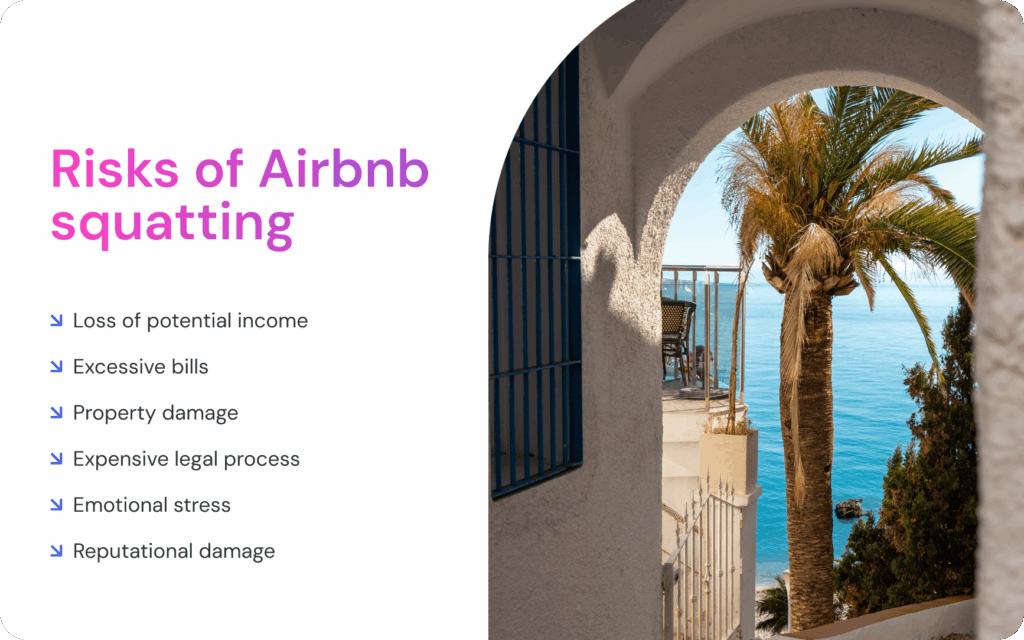
Most hosts fear property damage and related financial losses, but some things are even worse. Airbnb squatting can stress you out much more, causing years-long legal battles and conflicts.
Squatters come to your property and refuse to leave after the check-out date has passed. They claim to be long-term tenants and have legal rights to occupy the property. Negotiations don’t work, and you cannot find other ways than eviction, which is costly and draining.
Although not common, Airbnb squatters are one of the things to avoid with short-term rentals. It’s a true nightmare. That’s why you should know how to spot such people early on and what actions to take if it happens. Learn how to minimize the risks of Airbnb squatting in our post.
What are Airbnb squatters?
Airbnb squatters are guests who refuse to leave the property after their stay has ended. They exploit loopholes in the local law to obtain a tenant status, thereby granting them extended rights. You cannot make tenants leave easily since eviction laws kick in. The policy may come, but they won’t apply the force to boot the people out. You must go to court to protect your rights there.
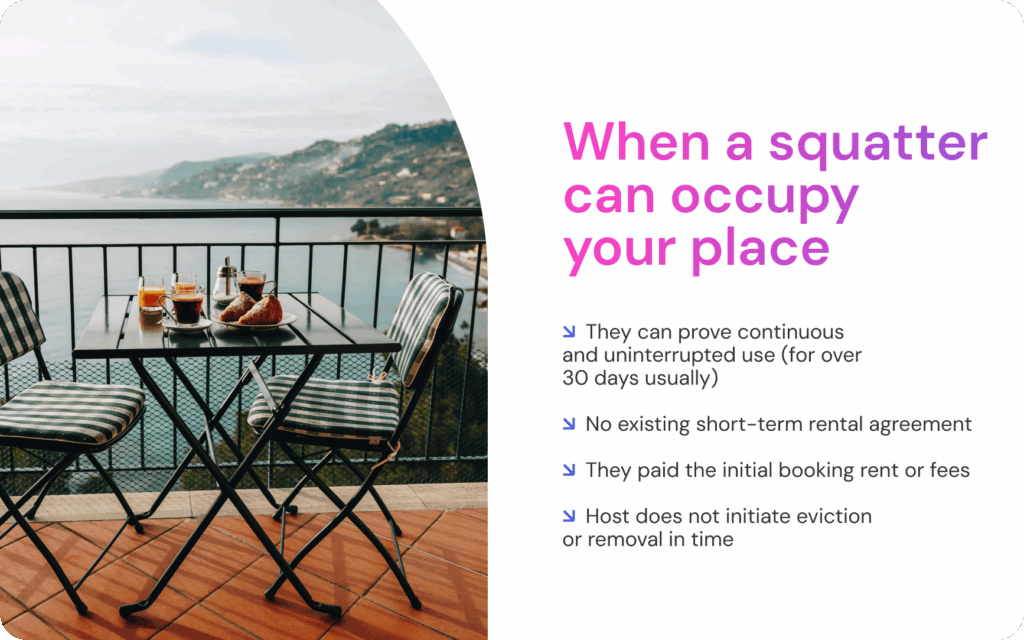
Airbnb squatting happens because in many US states, including California and New York, staying for over 30 days can classify someone as a tenant, rather than a short-term guest. A squatter may also be someone who breaks into a vacant property between bookings, puts up “No Trespassing” signs, and illegally stays there.
Why does Airbnb squatting happen?
Most Airbnb squatting happens because of loopholes in local tenant laws. In states like California, New York, and Oregon, guests can claim tenant rights quickly, while the eviction process is overly complicated. Squatters know that punishing them is difficult and leech off it. Squatting is also more common in high-rent markets where people cannot afford to pay for rent. Luxury Airbnb squatters seek illegal ways to live at someone’s place for free, even if it has legal consequences.
Airbnb squatters rights
It may sound upsetting, but a squatter in an Airbnb has many rights. Adverse possession laws enable people to claim ownership of property or land they have used for an extended period. Squatters may obtain the tenant rights after staying beyond the booking period, if the owner does not take immediate action. They also have the right to request formal eviction notices and demand a legal order for eviction. It complicates the process of getting back access to your property.
What about protecting hosts?
Local authorities are taking steps to distinguish legal renters from those who unlawfully take over property. With the growing number of cases when homeowners couldn’t regain access to their properties and some of them even handcuffed for that, the need for change is too evident.
The state housing law included in the 2025 New York State budget is one of the recent improvements. The law changes the definition of the squatter and no longer grants them tenants’ rights. However, you still cannot change locks or shut off utilities to make an illegal tenant leave. So, be sure to know your local laws and monitor the updates to know yours and others’ limits.
Does Airbnb protect against squatters?
While far from being perfect, Airbnb has some tools that can reduce the risks of squatting. It stores guest reviews, runs basic verification, and provides Host damage protection. Airbnb also has a Resolution Center to help you solve disputes and consult on issues like squatting.
However, the platform does not have an Airbnb eviction policy. You will be the one responsible for dealing with illegal guests and evicting them. Airbnb won’t come and physically remove squatters. It also doesn’t cover all financial losses. Eventually, Airbnb is just a listing platform connecting guests and hosts.

Early signs of a squatter
People abuse the law, causing cases like the one with Elizabeth Hirschhorn, who stayed in a luxury Airbnb rental for 570 days without paying. The story became so famous that it was even featured on the news and a documentary about Airbnb squatters in California.
Can you detect guests like that early on? Here are some signs of a potential squatter in Airbnb to watch out for:
- Asks for a longer stay. Staying over 28-30 days is a big red flag since prolonged stays may grant the guest the rights of a tenant. Airbnb is a place for short-term rentals.
- Has a suspicious profile. If you see someone’s profile and find it confusing, trust your gut. No reviews, an unverified account, or a lack of a profile picture increase the risks.
- Refuses to share basic information. Estimated arrival/departure, number of guests, and the purpose of stay should not be a secret. You may even request a passport copy for guest screening.
- Avoids signing an STR agreement. Airbnb doesn’t require guests to sign an agreement, but you can do it to protect yourself. If a potential guest refuses to accept the terms of stay in writing without a solid reason, don’t let them in.
- Wants to communicate outside the platform. Airbnb encourages users to stay within the platform to record every interaction. When someone insists on using another channel, it may be a potential squatter or fraudster.
- Payment issues. Declined cards or promises to pay later are strong warning signs. Make sure to charge the guest before they check in.
There are also more subtle signs, like someone bringing too much luggage or rearranging stuff like they are going to live there long-term. None of these is a sure sign that someone is a squatter. Yet they are enough to make you more alert and consider declining the booking.
Ways to protect your property from Airbnb squatters
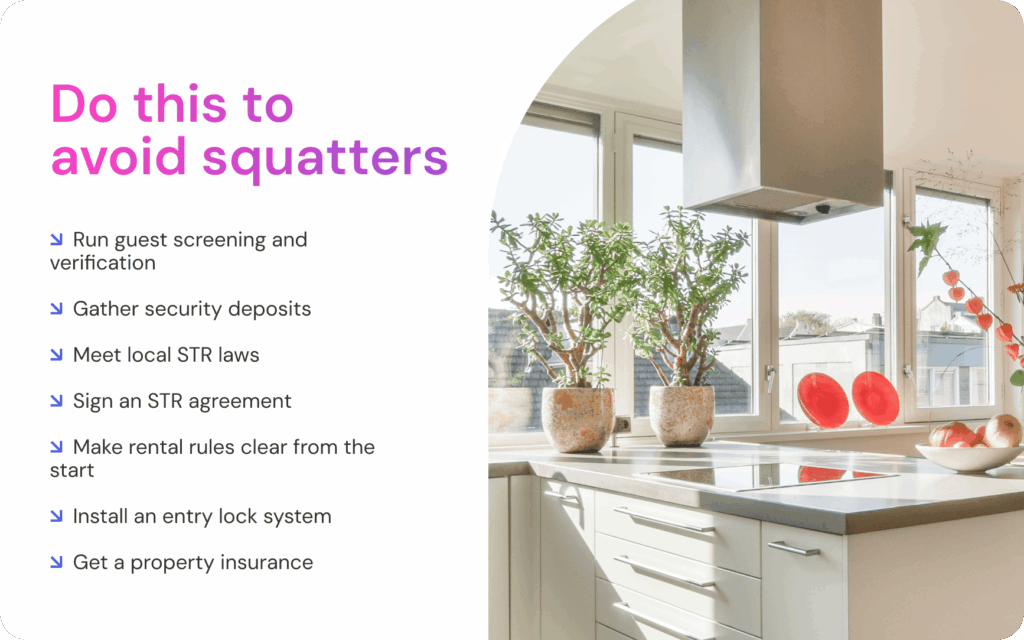
Watching for the red flags can help you detect suspicious booking requests. Yet, it’s not enough to feel safe. You must have a comprehensive strategy to prevent and handle Airbnb squatting. Combine professional guest screening tools with damage deposits, STR agreements, and other best practices.
Run guest screening and verification
Guest checks by Airbnb cannot give you the necessary protection. They happen sporadically, and don’t cover all accounts. That’s why you should consider integrating third-party guest verification services that offer more profound checks. Services like Truvi automate guest screening by requesting an ID and matching it with booking details for you. They use multiple reliable databases to double-check and flag accounts. Advanced ID verification has two big advantages. First, it detects suspicious accounts. Second, it makes people feel more responsible for their behaviors after the check-in.
Gather security deposits
Squatters often target listings without deposits or extra charges. Gathering an Airbnb security deposit may repel bad guests at the start. It’s a sign you are ready to protect your property and finances. Besides, security deposits are a fairly common practice in the US, where most Airbnb squatting cases occur. Damage deposits by Truvi enable you to set the deposit or waiver amount and automatically collect the money to make the guest journey smooth. Truvi is also a two-in-one solution since you get ID verification and damage deposits in one platform.
Comply with the law
Most states that have limits on tenants eviction also have strict short-term rental laws. Sometimes, following the rules and not exceeding the maximum duration of stay is the best protection.
*“Never let a short term rental property for more than 27 nights. I say 27 because the interpretation of ‘One month’ varies from one jurisdiction to another. Some classify a month as 4 weeks (28 days) while others classify it as a calendar month (Robin Sh)
“The best way is to obey laws. If you follow the laws of your area and don’t rent places with violations or abuse zoning codes, you will be able to turn to the courts for help. If you do illegal things yourself, your greed can lead you astray and cost you a pretty penny. Don’t skirt laws. Don’t rent properties that are dangerous or have illegal construction. Don’t be a hotel if you are not a hotelier and you will be fine (Mary F.).”
Read about Los Angeles Airbnb laws and New York rules in our blog.
Sign a legal agreement
Specify the terms and duration of stay in an STR agreement and ask guests to sign it before check-in. You can easily do it online with tools like DocuSign or Dropbox Sign. They will securely store everything, allowing you to access the document in case of Airbnb squatting or other concerns. Most importantly, a legal agreement can be additional leverage to make unwanted occupants leave. It will also help you win the legal proceeding if things go that far.
Voice your rules to guests
Although most Airbnb squatting happens intentionally, some people just don’t realize they must follow the rules. Usually, they overstay for no more than several days, but it still causes you trouble and financial losses. That’s why, we recommend being transparent about the terms of stay from the start and unobtrusively remind guests about the rules.
Install an entry lock system
An automated entry lock system with time-limited access codes allows you to remotely deactivate access once booking ends. Some locks also log entries with timestamps to detect suspicious activities beyond the booking period. It gives you more control over the property even if you are not present there and manage rentals remotely.
Get a property insurance
Even though a property insurance won’t save your place from squatting, it can cover the related damage. Guests who overstay may accidentally damage the property or intentionally do so because you have made them leave, and now they are mad at you. Good damage protection services can cover these expenses, allowing you to repair the damage.
What to do if Airbnb squatting has already happened?
The safeguards listed above greatly reduce the risk of Airbnb squatting. Still, no one is safe 100%. So, here are the steps to take if your guests are not willing to leave the rental:
1. Copy all communications across channels
Make copies of everything that can prove someone is occupying your place illegally and has had to check out long ago. Especially, if you have communicated outside of Airbnb and the person can delete the messages. These communications will help you get your property back.
2. Communicate. Don’t threaten or become aggressive
We know you want to kick them out right away, but don’t. It seems to give a short-term relief, but won’t help you regain access to your property. You may even end up having issues with the police, which is not what you want. A better approach is to remind guests about the terms of stay and your rights as the property owner.
*“The best advice I can give is to protect yourself, and there are a few ways you can do that. Don’t do anything that involves harming or threatening the squatter, doing so will frustrate your attempts to have them removed (Robin Sh).
3. Contact Airbnb support
Tell Airbnb support what is happening at your place. They can help you mediate the situation and communicate with renters about the rules. The support team may also consult you on the next steps to take. However, many hosts complain that in such cases, support cannot offer much.
“Airbnb guest stayed past reservation, refused to leave and when she finally did, I discovered she destroyed and stole things. Plus, I lost income from cancelling other reservations because of her occupancy. I also saw no red flags. She presented normal; good reviews, older woman, and nothing stood out. I received NO HELP from Airbnb (Pam1907).”
4. Consult a local lawyer
Partner with a local lawyer who specializes in such cases for consulting and further help with court proceedings. Most Airbnb squatters are experienced scam artists, not the nice people who somehow forgot to check out. That’s why you need professional support to understand Airbnb’s squatters’ rights and how to initiate the eviction process if necessary.
5. File a formal eviction
Send a formal request to the rulebreakers to quit. You may need to hand it in personally with a witness if the local law requires it. If the squatter does not comply with the eviction notice, go to the court and file a complaint for unlawful detainer. Wait for the court date and use official bodies to remove the Airbnb guest after you have the legal right to do it.
Note. You must not accept any additional payments from the guest after the checkout date. It can solidify their rights as a tenant and make eviction more difficult.
Important Disclaimer: The content of this blog post is for informational purposes only and does not constitute legal advice. We strongly recommend seeking professional legal counsel for any specific legal questions or before making any decisions based on the information provided here. Truvi makes no representations or warranties regarding the accuracy, completeness, or suitability of the information and will not be liable for any loss, damage, or legal consequences arising from its use.