

The question isn’t if you’ll exit your short-term rental business. It’s when and how.
I’m not talking about some generational handoff fantasy. I’m talking about the practical reality of selling, cashing out, or simply moving on. Whether it’s age, health, burnout, or just wanting to do something else, you need a plan for how this ends.
Most people don’t think about this until they’re already exhausted and looking for the door. That’s when they discover a rushed sale leaves serious money on the table.
So when’s the right time to start planning your exit?
From Day One (Or Right Now)
Annette and Sarah, two well-known short-term rental investors and practicing managers, say you should start thinking about exits before you even buy your first property.
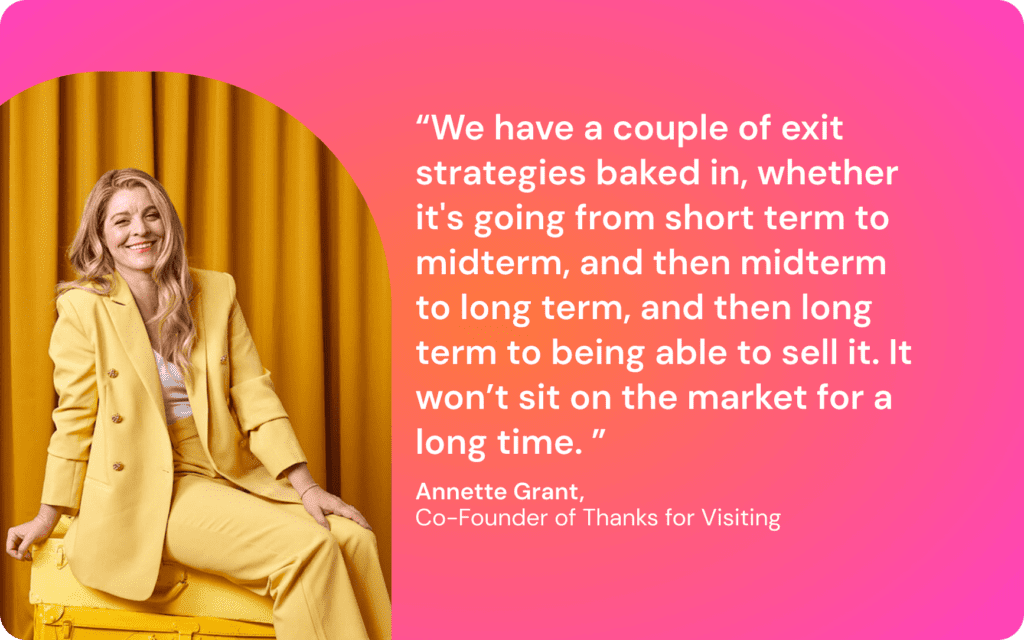
“There are a few exit strategies whenever we’re buying something that we consider,” Annette explains. “We have a couple of exit strategies baked in, whether it’s going from short term to midterm, then midterm to long term, and then long term to being able to sell it. It won’t sit on the market for a long time. So it is a long-term play.”
Jesse Vasquez from Air Venture puts it even more directly: “We’re living in different times, so what worked before won’t work now. The regulations are making short-term rentals in cities like New York and Dallas hard to run, so we should adapt to the new reality.”
His advice? For each property you run or own, have a Plan A, Plan B, and Plan C in place.
This isn’t paranoia. It’s prudent business planning. Regulations change. Markets shift. Your circumstances evolve. Building in flexibility from the start means you’re not scrambling when things change.
At Least Two Years Before You Want Out
If you’re running an actual business rather than just owning a property or two, you need serious lead time.
I’m not saying you do all the prep work yourself. But you need to understand what goes into a business sale and what affects your final price:
- Equipment and inventory
- Amenities and furnishings
- Client lists and contracts
- Real estate (if you own it)
- Team and company culture
- Systems and processes
The list gets longer depending on how much you’ve built.
As Kauffman FastTrac warns: “Unfortunately, those entrepreneurs who do not plan an exit strategy will, at some point, exit from their businesses unprepared.”
Two years gives you time to get your documentation in order, improve your financials, systemize operations, and position the business to be attractive to buyers. It also gives you options instead of desperation.
When You’re Ready to Leave (Even If You Haven’t Planned)
If you’ve skipped the exit planning until now, today’s a good day to start.
Not everyone wants out, though. Ben Earley, an ex-hedge fund manager who now runs a property management company, isn’t looking for the door.
“Many of my peers in the short-term rental business have the exit in mind. I have zero plans for exit,” he says.
“The entire beginning, middle, and end of this business, whenever it is, has always been to create monthly cash flow. That has always been the goal and that is the team we’re building. We are building a team that can handle this stuff without me and my wife, the co-founder. We’re building a bunch of cash-flowing assets, and there is a plan to convert from renting everything to potentially buying things in the future with the insight that we have in every property.”
Stephanie Figueros takes a similar view. She’s considered “STR for life” in the industry. The only exit she sees is sizing down her portfolio, buying some of her favourite properties, and running them as short-term rentals until she gets another idea.
Both approaches are valid. The point isn’t that everyone needs to exit. It’s that you should know what you’d do if circumstances changed.
Your Exit Options
There aren’t really new exit strategies under the sun. What you’ve built over the years, you can sell, refinance, or transform.
Sell to a buyer: Family members, colleagues, retail buyers, or investors. All potential buyers depending on what you’ve built and what’s for sale.
Convert the property: If you’re not ready to sell, transition your short-term rental to a long-term rental. This provides steady income and lets you retain ownership. Alternatively, consider a rent-to-own arrangement where tenants can purchase at a later date.
Refinance: Tap into your property’s equity. Use the funds for other investments or to pay off debt. This keeps you in ownership while accessing capital.
Each option has different tax implications, timeline requirements, and levels of complexity. The specifics depend on your situation and local regulations.
What You Should Do Next
Exit strategy planning is philosophical as much as practical. You need to understand where you stand with your business and know what your future should look like.
What do you actually want? What do you enjoy doing? What can’t you stand?
The best exit strategy is the one you never need because you planned alternatives. But if you do need it, having thought it through years earlier makes all the difference.
Start with these steps:
Document everything. Get your financials in order, understand which assets are truly sellable versus personal, and create systems that document how things actually work.
Build independence. The business should function without you being personally involved in every decision. That’s what makes it valuable to someone else.
Know your market. Understand what similar businesses have sold for, what buyers look for, and what regulations might affect transferability.
Review regularly. Your exit strategy shouldn’t gather dust in a drawer. Review it annually as your circumstances and the market evolve.
Talk to people who’ve done it. Find operators who’ve successfully exited and learn from their experience. What they wish they’d known earlier can save you significant time and money.
Whether you’re buying your first property or running 100 units, the question remains the same: what happens when this chapter ends? Answer it now, and you’ll have options when the time comes.