Google and ChatGPT are transforming how guests book travel. Everyone assumes big brands will dominate. Here’s why small property managers have the real advantage — and how to prepare.
Property managers keep asking me the same question: “Won’t AI just make Airbnb and the big OTAs even more powerful?”
It’s a reasonable fear. When Google launched AI-powered trip planning recently, the obvious assumption was that big hotel chains and booking platforms would benefit most. They have the partnerships, the data, the marketing budgets.
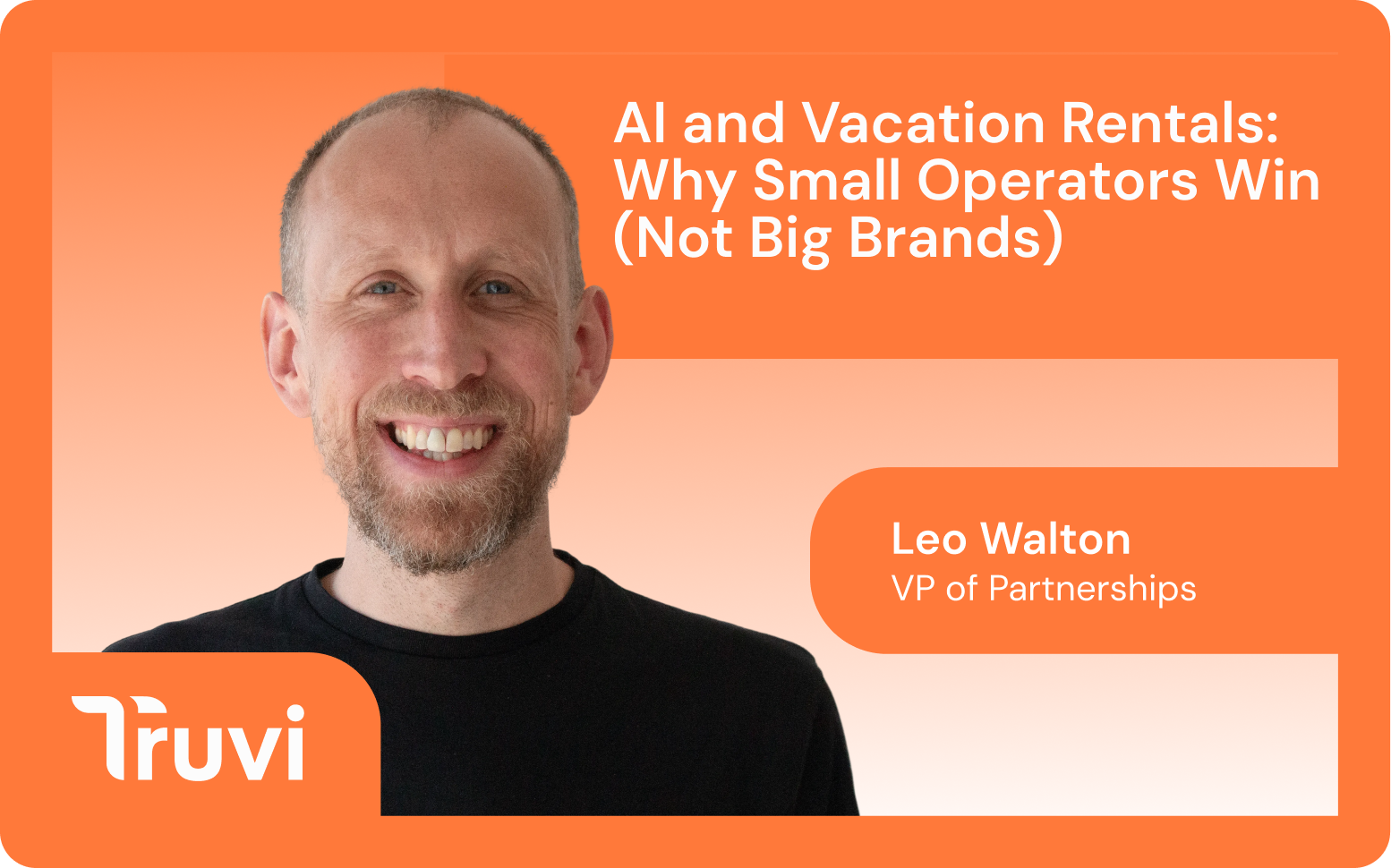
I was part of the team that helped grow onefinestay from one house in London to a global company with over 6000 listings, so I’ve watched every wave of consolidation in this industry. This time is different.
AI doesn’t favor scale. It favors trust, specificity, and authentic relationships. That’s exactly what small operators have and big brands don’t.
I think independent property managers are about to have their best competitive advantage in years, and what you need to do in the next six months to capitalize on it.
This article draws on insights from a recent episode of The Check-In podcast, where I spoke with Boris Pavlov, founder and CEO of Flataway, along with my co-host Sarah Nan DuPre.
Boris previously scaled and sold an 800-unit property management company and now builds AI-powered tools helping operators drive direct bookings. His technical expertise on AI and vacation rentals informs much of what follows.
The Question Everyone’s Asking About AI
Google didn’t just add some travel tools recently. They rolled out an AI engine that can plan trips from start to finish without travelers ever touching an OTA, a listing site, or maybe even your brand.
The system shows flight deals, builds complete itineraries, suggests activities and neighborhoods, and eventually points people to places to stay. All inside Google.
For the short-term rental world, this isn’t another feature update. It’s a fundamental shift in who controls distribution.
If Google becomes the gatekeeper for travel, everyone else becomes a supplier. That’s the fear, anyway.
ChatGPT has roughly 800 million weekly active users. That’s a solid percentage of the global population already using it every day. Many of them are planning travel, searching for accommodations, asking for recommendations.
The stakes are high. When Booking.com and Expedia’s stock dropped after Google’s announcement, the market signaled that OTAs are losing their grip on distribution. The assumption is that Google and big hotel chains will fill that vacuum. But I think they’re looking at it wrong.
Why Everyone Thinks Big Brands Will Win with AI
Look, on paper, this should absolutely consolidate power at the top. The case for big brands dominating AI travel is fairly compelling.
Google’s existing partnerships
Google already works with IHG, Marriott, and Booking.com. Those relationships are established. Boris points out that Booking.com is Google’s biggest advertising client, which creates an interesting dynamic. Google can’t easily become a direct competitor to the companies paying them billions in ad revenue, he notes.
Google even retracted their statement about “becoming an OTA” just hours after announcing AI trip planning. They’re walking a tightrope between enabling the entire booking flow and protecting existing business relationships.
The OTA advantage
Booking platforms have massive inventory, enormous marketing budgets, and tech infrastructure that’s been refined over decades. They’ve built systems that work. They have payment processing solved, fraud prevention sorted, customer service teams in place.
Hotel chains have flags
Brand recognition matters. When you search for hotels, IHG and Marriott have instant credibility. They have loyalty programs, consistent standards, and recognizable names that signal trust.
The fragmentation problem in short-term rentals
Our industry is incredibly fragmented. We have thousands of individual property managers scattered across the world, all using different property management systems. The PMSs themselves aren’t ready to integrate their supply into AI platforms or even into Google directly.
That’s the major technical problem right now. There’s no unified way for AI platforms to tap into short-term rental inventory.
“Every single PMS has a completely different API,” Boris explains. In one system, you call a property beachfront, while another uses seafront or sea view. OpenAI isn’t going to build individual integrations with every PMS, he notes. They’ll wait for a universal API that lets them grab inventory quickly and support one integration instead of dozens.
Payment and booking infrastructure
Big brands have frictionless booking flows. One-click purchasing. Saved payment methods. Instant confirmations. These seem like small things, but they’re hard to build and even harder to integrate across platforms.
So yes, if you’re looking at resources, relationships, and infrastructure, big brands should win. That’s what makes this moment so interesting. Because I think they won’t.
Why Small Operators Actually Win with AI
The conventional wisdom is wrong. Boris has been working on this problem for years. “It’s been my mission in life to help property managers become less dependent on OTAs,” he says.
“And now with AI appearing, I feel like this is the missing piece of the puzzle.” He believes we’re finally on the verge of becoming independent from OTAs and all intermediaries.
The Netflix vs Google model
This is the crucial distinction that changes everything. Google operates on a paid placement model. Whoever pays the most for ads ranks highest. That’s their business model. It’s how they make money.
But ChatGPT and other AI platforms operate on a subscription model. Users pay for access to the platform. They’re not seeing ads. They expect unbiased results.
That expectation of impartiality completely changes the trust dynamic. When I’m searching Google, I know the top results might be there because someone paid for placement. When I’m asking ChatGPT, I expect it to find the genuinely best option for me.
You could argue that AI platforms might double-dip and take payments from properties to rank higher. That would ruin user trust immediately. The whole value proposition of these platforms is that they’re working for you, not for advertisers.
The democratization moment
Tech walls that have been built very cleverly by the likes of Airbnb are about to come crashing down.
Think about this scenario. When I’m landing at Austin airport or Las Vegas airport and the plane hits the tarmac, I want to talk to ChatGPT and have it make sure there’s an Uber waiting for me as I leave the terminal. I then want to make sure that someone from the short-term rental I’ve booked can message me directly within that same conversation.
The independent host with one or two listings in Las Vegas can interact with me directly as I’m booking my Uber. They can message me: “By the way, Leo, the code is this and there’s a bottle of wine in the fridge for you.”
That’s democratizing. That should win. I’m lazy and I just want all of it taken care of in one conversation.
The platform lock-in that made Airbnb so powerful disappears when guests can communicate directly with any operator through AI interfaces.

What actually matters in AI recommendations
Big brands have things that suddenly matter less:
Marketing budgets don’t influence AI recommendations the way they influence Google ads. Brand recognition means less to algorithms trying to find the perfect match for a specific traveler. Scale doesn’t equal relevance when someone’s asking for something very particular.
Small operators have things that suddenly matter more:
Trust signals
Real reviews from actual guests. Verified screening processes. Responsive communication that AI platforms can track. Professional standards that are visible and consistent.
Niche specificity
There are roughly 8 million vacation rental properties out there globally. In saturated markets, you need to find the one thing that’s genuinely special about your property. The one thing that makes it perfect for a very niche market.
AI enables you to reach that niche market in ways that weren’t possible before. A traveler can write: “I need a one-bedroom apartment, budget-friendly, very close to this conference venue, best internet possible, and I don’t like heights.”
That last part is something the AI already knows about them because they’ve been chatting for a while. It picks something on a lower floor automatically.
Your property might be perfect for that extremely specific request. A big hotel chain offers generic rooms. You offer exactly what that traveler needs.
Authentic relationships
Local knowledge, personal touches, and the flexibility to adapt quickly all become genuine competitive advantages. You can implement changes today. A large hotel chain takes six months to update property policies.
Direct booking capability
You can build this infrastructure now. You don’t need committee approval or legal review processes that take quarters to complete.
The 6-Month Timeline: Why You Need to Move Now
Boris sees the change coming pretty soon: “In 6 months time, there will be a way for every professional property manager on a PMS to list their inventory directly with either an LLM or Google.”
Technical challenges being solved right now
The major problem is integration. Property management systems all have different APIs. OpenAI isn’t going to build individual connections to 35 different systems. They’ll wait for someone to create a universal connection layer.
That layer is being built right now. Companies are working on it. The vacation rental industry has been around for less time than hotels, and there are fewer tech providers serving it. But that’s changing quickly.
Payment gateway integration is coming. The ability to complete bookings without redirecting users is being developed. These technical hurdles aren’t insurmountable. They’re just being figured out.
Small operators have a speed advantage
Large hotel chains and big brands move slowly. Corporate bureaucracy means decisions go through multiple committees. Legal reviews take months. Implementation requires coordination across thousands of properties.
You can make a decision today and implement it tomorrow.
That’s a proper first-mover advantage. AI platforms will start learning which operators to trust, which properties to recommend, which hosts respond quickly and professionally.
Being early in that learning process matters. The platforms will develop preferences based on track records. Building yours now means you’re established when big brands finally get their act together.
This window won’t last forever. Early adopters get disproportionate benefits in any platform shift. Once the big players catch up, you want to already have an established presence and positive track record with AI systems.
User adoption will happen faster than you think
Some people worry that travelers won’t adopt AI booking quickly enough. That’s not the concern.
ChatGPT has 800 to 900 million weekly active users. That’s already a solid percentage of global population using it daily. Adoption has happened. The question is just when the booking infrastructure catches up to the search behavior.
People already trust these platforms for recommendations. The shift to booking through them will be rapid once it’s possible.
How to Win with AI: The New Rules for Small Operators
Right, so what do you actually do?
Find your one thing
With 8 million properties globally, generic doesn’t work. AI needs to match specific travelers to specific properties.
What makes your property perfect for someone particular? Not “great for everyone” but “absolutely ideal for this type of guest.”
Examples:
- Best property for remote workers in Charleston (fiber internet, dedicated workspace, quiet neighborhood)
- Pet-friendly beachfront for families with toddlers (fenced yard, beach toys, baby equipment)
- Conference-ready downtown condo with parking (walking distance to convention center, desk setup, guaranteed parking)
The more precise you are about your ideal guest, the better chance AI platforms can match you to them.
“Imagine there’s 8 million properties out there,” Boris explains. In saturated markets, you need to find the one thing that’s super special about your property. That niche traveler will literally write specific requests into the LLM, he notes. They might say they need a one-bedroom apartment near a conference venue with great internet and mention they don’t like heights. That last detail is something the LLM already knows about them from previous conversations, so it can match them to a ground-floor property automatically.
Make everything machine-readable
A bit technical, but it matters. Your content needs to be readable by both humans and AI systems.
Add FAQ sections to your website
Boris has specific tactical advice here: “FAQ section, frequently asked questions, long tail with 40 to 60 word answers. That works like a charm.” It’s something super easy any property manager can do today, he explains. These get picked up by LLMs, and the platforms start thinking you’re a trusted authority.
Questions like:
- Why is this property perfect for families visiting Charleston?
- What makes this suitable for remote work?
- What’s the best property for beach access in South Haven?
Keep descriptions consistent everywhere
The exact same descriptions need to appear on Airbnb, Vrbo, and your direct booking website. Travelers are becoming more savvy and they look to book direct. They’re comparing. Inconsistencies create distrust.
AI platforms cross-reference information. If your property is described differently across platforms, that’s a red flag.
Technical optimization matters
Make sure you have proper site maps. Have machine-readable information structured correctly. This isn’t just Google SEO anymore. It’s LLM optimization.
Build trust signals AI platforms can see
Trust is the currency of AI recommendations. These platforms stake their reputation on good suggestions. They need to know you’re reliable.
Trust signals include:
Reviews from other platforms on your website
Aggregate them. Show the full picture of your track record.
Professional guest screening
Signals that you’re serious, that you have systems in place, that you’re not just winging it. More on this in a moment.
Responsive communication
AI platforms will track how quickly you respond, how professionally you communicate. This becomes part of your ranking.
Detailed property information.
Complete, accurate descriptions of everything. Don’t leave gaps that create uncertainty.
Consistent data everywhere
Boris emphasizes making sure you’re listed accurately on Google Maps, Apple Maps, and OpenStreet Maps. OpenStreet Maps is used by many AI tools instead of the more expensive Google Maps, he notes. I’d add that your Google Business Profile is especially important since it feeds directly into Google Travel, where Google’s AI trip planning surfaces properties.
Embrace direct booking infrastructure
Your direct booking website isn’t just another sales channel anymore. It’s your data hub for AI platforms.
Think about how AI systems will contact you to make bookings. Not just through your website, but potentially through chat, email, phone. You need to be ready across all channels.
Fast response times matter. Modern payment processing matters. Clear availability and pricing matter. Frictionless booking flows matter.
This isn’t about having a pretty website. It’s about having functional infrastructure that AI systems can interact with reliably.
Document your brand story
Who are you? What makes you special? Why should someone trust you?
Sounds a bit soft, but it’s increasingly important. AI platforms will look for information about operators, not just properties. Your story, your expertise, your local knowledge all become part of how you’re evaluated and recommended.
Write it down. Make it visible. Make it readable by both humans and machines.
Why Guest Screening is Your AI Competitive Advantage
This matters because it connects directly to how AI platforms will evaluate operators.
Trust is the currency of AI recommendations
AI platforms must recommend properties that guests will love. Their entire reputation depends on making good matches. How do they know you’re trustworthy?
They look for signals. Verified processes. Professional standards. Track records of responsible hosting.
Guest screening is one of the clearest signals you can send. It says: “I don’t accept just anyone. I have standards. I verify identities. I check backgrounds. I take this seriously.”
What screening signals to algorithms
When an AI platform sees that you screen guests, it understands several things:
You’re not an amateur host hoping for the best. You’re a professional operator with systems in place. You reduce risk for guests by ensuring the community around them is safe. You reduce risk for the platform by maintaining high standards.
This differentiates you from casual hosts who accept any booking. Shows you care about quality over quantity.
Professional guest screening typically includes identity verification, background checks, and fraud prevention. These aren’t just protective measures. They’re proof that you’re serious.
Small operators can move faster on this
Large hotel chains take months to implement new screening processes. Corporate policies, legal reviews, system integrations all move slowly.
You can implement professional screening this week. That’s a proper timing advantage.
Early trust signals mean early algorithmic preference. When AI platforms start ranking operators, your established track record of verified, professional screening puts you ahead of operators who are still figuring it out.
Guest screening and comprehensive damage protection work together to show AI platforms that you maintain professional standards consistently. You’re not just hoping guests behave well. You’re ensuring it.
What to Do Right Now
Theory is useful, but action matters.
This week
Audit your property descriptions. Are they identical across Airbnb, Vrbo, and your direct booking site? If not, make them consistent.
Add five to ten FAQ questions to your website. Use the 40 to 60-word answer format. Think about what your ideal guests actually ask.
Claim and verify your listings on Google Maps and Apple Maps if you haven’t already. Make sure basic information is accurate.
This month
Implement professional guest screening if you don’t have it yet. This is foundational.
Aggregate reviews on your direct booking site. Don’t just have Airbnb reviews on Airbnb. Bring them together in one place.
Create a detailed profile of your perfect guest for each property. Who are they? What do they need? How is your property ideal for them specifically?
This quarter
Build or upgrade your direct booking infrastructure. Make sure you can handle bookings smoothly without sending people through multiple systems.
Establish response time standards and actually meet them. AI will notice.
Document your brand story properly. Write it down, make it visible, structure it so both humans and AI can understand who you are and why you matter.
Stay informed
The industry is moving quickly. Things that seem impossible today will be standard in six months.
Keep reading industry news. Listen to podcasts about where things are heading. Watch for announcements about PMS integrations with AI platforms.
As soon as there’s a gateway to connect directly to AI platforms, take advantage straight away. Don’t wait to see how it goes. The first movers will establish themselves as the trusted options.
The Walls Are Coming Down
So back to that original question: won’t AI just make Airbnb and the big OTAs even more powerful?
No. AI favors trust, specificity, and authentic relationships. Small operators have those advantages. Big brands have scale, but scale matters less when algorithms are matching individual travelers to perfect-fit properties.
Platform dominance from Airbnb and OTAs is ending. Not because the platforms are going away, but because the distribution game is being completely rewritten.
Those who move in the next six months will win disproportionately. You’ll establish track records with AI platforms. You’ll build the trust signals that algorithms look for. You’ll be ready when the booking infrastructure catches up to the search behavior.
I’ve spent years in this industry. I’ve watched every consolidation wave, every platform shift, every moment when it seemed like independent operators were finished.
This time genuinely is different. The floor has moved. The game has changed.
Small property managers finally have proper competitive advantages against big brands. You just need to use them.
Start building your AI-ready brand today. Professional guest screening is where trust begins. The rest follows from there.
Want to hear the full conversation?
This article is based on an episode of The Check-In podcast, where Leo Walton and Sarah Nan DuPre discuss the future of short-term rentals.
Listen on YouTube, Spotify, or Apple Podcasts.