

Prevent bad guests from ever entering your rental
Truvi runs automatic checks on every booking through your PMS, with no manual steps from you and no additional friction for your guest.
Check guests against our data
Every guest is screened against Truvi’s database of problem guests, built from 800,000+ screenings. This protects you across all your booking channels, not just one platform. Automated, instant, and frictionless.
Verify your guests' identity
We verify every guest’s email address and phone number, flagging potential fraud. You can also add checks for criminal background, sex offenders, and ID verification, which can help with regulatory compliance as well as providing added security.
Make informed booking decisions
We give you a risk score based on factors including lead time, length of stay, and booking patterns. High-risk bookings are flagged in your dashboard along with risk indicators. Truvi never rejects a booking: you decide what level of risk you’re comfortable with and can take informed decisions.
Bad guests cost more than just the damage they cause
A problem booking doesn’t just mean a repair bill. It means time spent gathering evidence, chasing payment, managing owner relationships, and dealing with neighbour complaints. Across a portfolio, that operational burden compounds quickly, and repeat offenders are skilled at presenting themselves as legitimate.
Most of the information that identifies a risky guest isn’t visible on the booking platform. A new account, an unverifiable phone number, a name that doesn’t match later communications: these details are easy to miss when you’re processing bookings at volume.
Knowing how to vet Airbnb guests effectively means going beyond what the platform shows you. It means having a process that runs on every booking, not just the ones that feel suspicious.
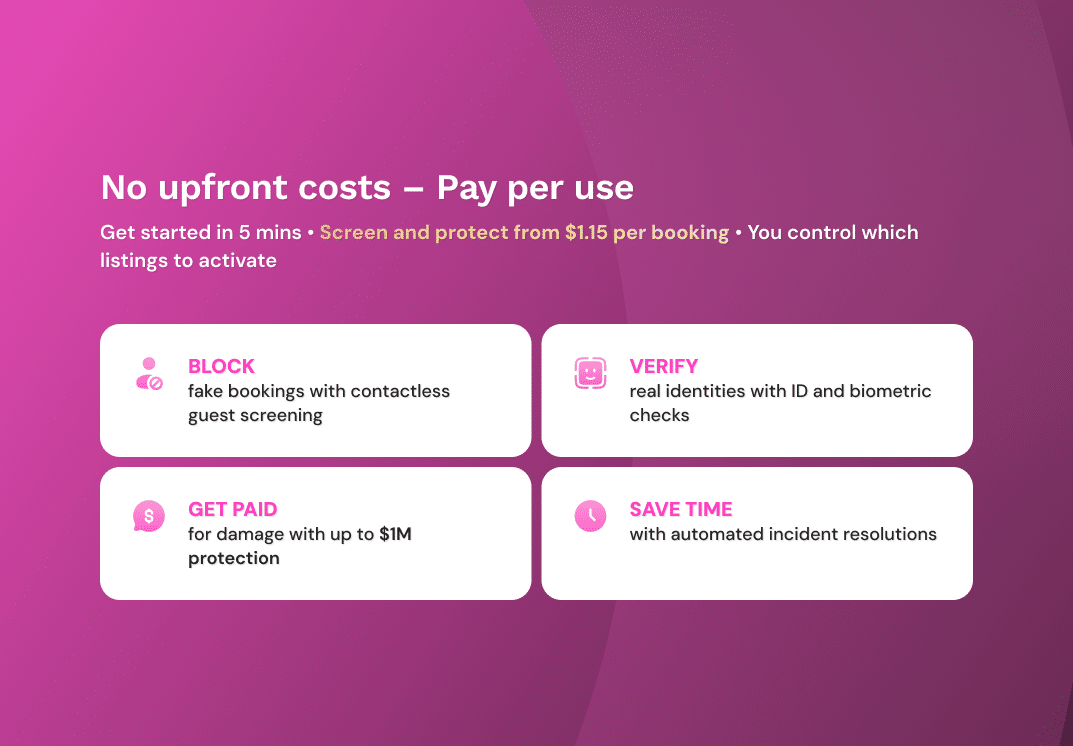
Airbnb guest red flags that indicate a risky booking
These are the signals experienced property managers watch for before accepting a reservation:
You can't verify their identity
No booking history, no reviews, a name that doesn’t match later communication, an odd email address or phone number. One or more of these could mean trouble.
The booking doesn't add up
A guest booking near home, and at short notice, is one of the signals for party bookings. It’s not a guarantee, but it’s a signal worth acting on before the reservation is confirmed.
Their communication raises questions
Evasive answers about the purpose of the stay, vague responses about group size, or requests to pay outside the platform, can be signs of problematic guests.
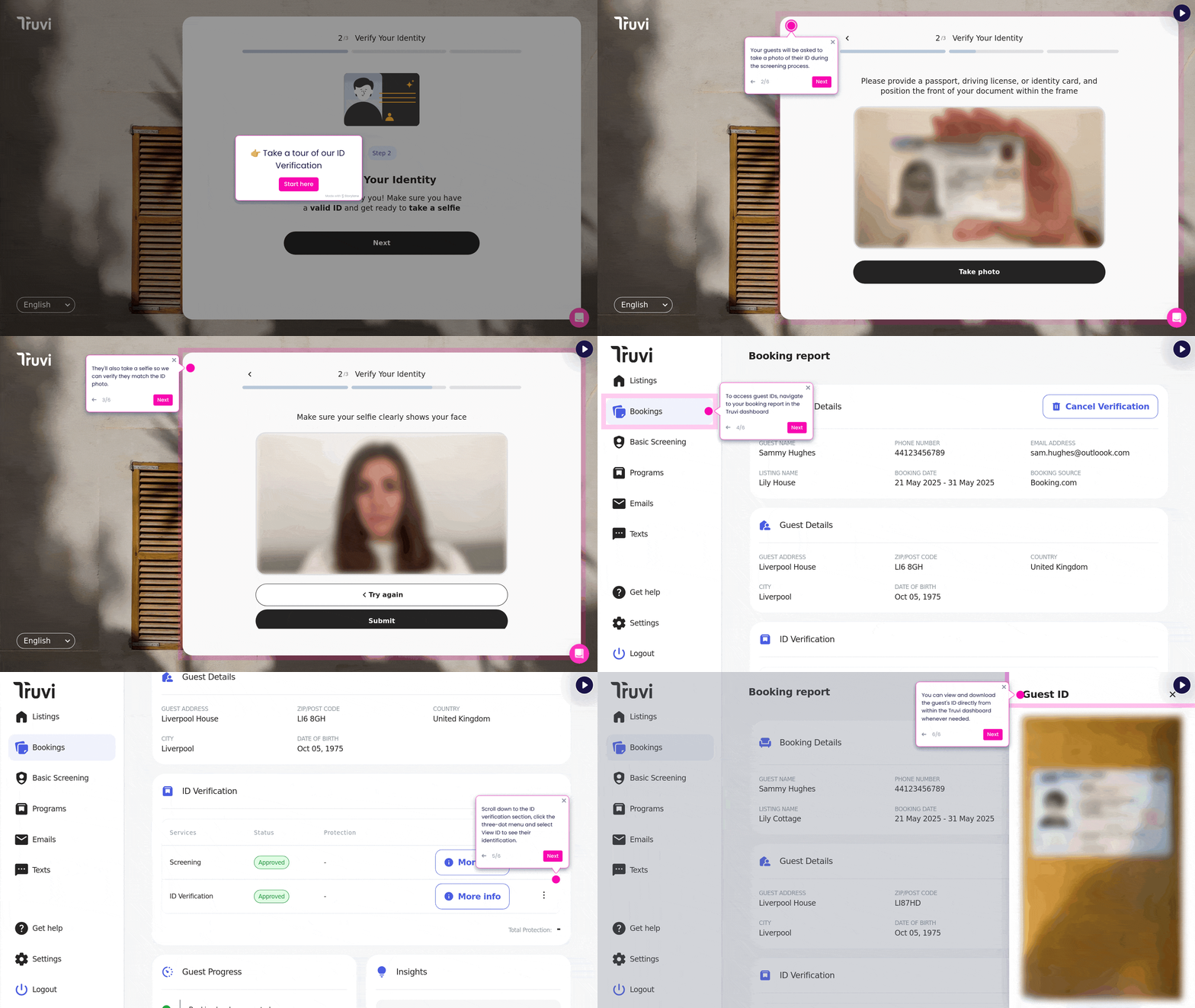
Manual vs Automated Screening
Why manual vetting only gets you so far
Most property managers start by checking what’s publicly available – profiles, reviews, a quick search. It’s a reasonable starting point, but it has three meaningful gaps:
- It’s time-consuming and subjective. Manual checks become inconsistent as booking volume grows, and what one person flags as suspicious another might wave through. Gut feeling is not a screening process.
- It misses what isn’t public. A guest who has caused damage at another property, or had a booking flagged for fraud, won’t appear in any review profile or search result.
- It leaves no audit trail. When something goes wrong, “it felt suspicious” is not a defensible account of your screening process. Manual checks leave no record of what was assessed, what was found, or why a booking was accepted or declined.
Automated screening addresses all three, running consistent checks on every booking without adding steps to your process.
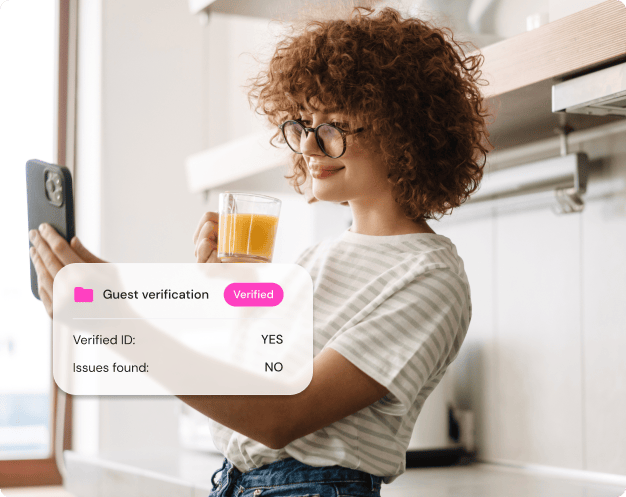
Why property managers trust Truvi to screen their guests
By automating damage protection and guest screening through Truvi, STR Accommodations can focus their energy on strategic growth and investor relations – not chasing damage payments.

Cody Wood
COO, STR Accommodations






Stop relying on gut feeling. Screen every guest automatically.
No upfront costs · Get started in 5 mins · From $10.90 per booking · Pay per listing



“What I like about Guest Screening is that we don’t need to build a list of bad guests ourselves… Truvi already has the info and has a much larger database of guests than we have.”