Airbnb has almost become a synonym for short-term rentals, but is it really the only option? There are other solid alternatives worth considering. The online travel agency (OTA) market offers plenty of variety. Airbnb does take the largest share, which has grown from 28% in 2019 to 44% in 2024.* Yet the remaining 56% have a lot to offer, and some OTAs may be a better option in your case.
Different platforms have different audiences, as well as varying policies, charges, and levels of competition. You may also find unique features that Airbnb doesn’t have, or you may simply combine listings on several platforms to increase reach and visibility.
Knowing which alternatives to Airbnb are out there, will help you make smarter decisions for your business. Check out the list of apps similar to Airbnb below (and find out why they may be better.)
15 best Airbnb alternatives
Each platform below targets different guest types and property styles. We’ve broken down the costs, audiences, and key features so you can decide which ones make sense for your rental business.
1. Vrbo: Offer an entire house to large groups
Vrbo takes 9% of the market share, focusing on people in search of entire places. Vrbo’s main target audiences are families looking to make new memories and guests wanting a longer stay. Many reviews say the platform is particularly popular with boomers looking for vacation rentals.
“Hawaii host – 95% Airbnb – however, my longer stays (3 weeks plus) tend to come from VRBO . My hunch is that VRBO is mainly older clientele that can afford to spend that much time/money and also Canadian guests.” Reddit user
It targets a more professional audience than Airbnb. While Airbnb covers all types of rentals, experiences, and services, Vrbo targets homeowners who can host groups of people. The platform also puts available listings into featured categories, such as “Trending destinations near you”, which can help you attract guests with relevant interests.
Vrbo is part of the Expedia Group marketplace. Expedia purchased it a decade ago, making the platform closely connected with other travel brands. Plus, Expedia focuses its marketing on Vrbo, which helps hosts get more visibility. For example, when guests search for a property on HomeAway, they are redirected to Vrbo to make a booking.
Cost
Listing on Vrbo is free. You only pay a 5% commission fee when you receive a booking and a 3% fee for payment processing.
Best for
Hosts and property managers offering entire home rentals for families and guests seeking longer-term stays.
2. Booking.com: Be an alternative to hotels
People looking for sites like Airbnb often consider Booking.com. It’s a popular platform, taking 18% of the STR market. The US generates the highest share of visits, so if you have a property there, Booking.com may be a better option than Airbnb. Many international travelers also choose Booking.com as Airbnb and Vrbo alternatives as it gathers a diverse range of properties in one place. It has over 28 million registered accommodations, with over 6.6 million houses, apartments, and other dwellings. It’s slightly less than on Airbnb, but still a lot.
Booking stands out with customizable cancellation settings and better PMS integration. On the other hand, it’s not a dedicated short-term rental platform. But since Booking.com mixes hotels, hostels, B&Bs, and apartments together, you’ll face more competition for guests.
Cost
The platform follows a commission-based business model, charging hosts a set percentage of each reservation. The charges vary from 10% to 25% per booking, depending on your location and agreement.
Best for
Booking.com is a nice option for hosts who have apartments in popular destinations where hotels are often busy or expensive. It also works well for property managers running multiple units who need volume and automation.
3. TripAdvisor Rentals: Reach a large traveler audience
TripAdvisor is best known for its honest reviews of hotels and places, but it also offers tools for short-term rentals. Its Rentals portal enables guests to find and book a property globally. The interface is more confusing than in regular OTA platforms like Airbnb, which is predictable since Tripadvisor serves all possible travel purposes.
One advantage of TripAdvisor is that travelers can book everything in one place. You can book flights, car rentals, tours, and other extras. The platform is popular in the UK and Europe and cheaper than Airbnb. These factors may also affect your decision on whether to list here.
Note that you cannot list on TripAdvisor Rentals directly. Properties are pulled from sites like Booking.com, Vrbo, and Expedia. It means Tripadvisor Rentals redirects users to partner websites where they can finish bookings. So if you have listings there, you may already end up on TripAdvisor Rentals.
Cost
You set up a listing for free and pay only after someone books your property. The website deducts a 3 % processing fee from the guest’s payment.
Best for
TripAdvisor Rentals works well for owners of traditional vacation homes in tourist destinations. It also has lower competition than many other alternatives to Airbnb and Vrbo.

4. Couchsurfing: Host guests who want a local experience
Couchsurfing isn’t a direct Airbnb competitor, but it works for property owners who enjoy hosting and aren’t focused on profit. You meet people from different parts of the world, give them a room at your place, and spend time together to get to know each other. You may offer them paid tours or other extras, but more often than not, Couchsurfing is a goodwill-based, free service.
Cost
You share your property for free.
Best for
Hosts who enjoy communicating and spending time with their guests. You can combine Couchsurfing with Airbnb rentals if you don’t chase after high profits or 100% occupancy from paid rentals.
“I have hosted couch surfers in Munich and am an Airbnb host as well. Couchsurfing was much more about the experience of meeting people from all sorts of places, learning about those places, taking those people to see different sites in the area, and having some meals together. Airbnb hosts are paid by the renter. There is no expectation that you as the host are going to be part of their experience in your town or city.” Martin M
5. Google Vacation Rentals: Reach guests through Google
Google Vacation Rentals are not an OTA. You can’t add a listing directly to the platform. It also doesn’t process bookings like Airbnb-type sites, doesn’t have damage protection, and lacks many other features. If you’re taking direct bookings through Google, you’ll need separate insurance for direct bookings to protect your property.
To make your listing available through Google, you can use a supported partner platform or channel manager. Learn more about Google Vacation Rentals and how to get more bookings in our blog. Overall, Google Vacation Rentals is not a 100% Airbnb alternative, but rather a valuable addition to list your place.
Cost
Google Vacation Rentals won’t charge you directly. The cost depends on the pricing of the OTA or channel manager you use.
Best for
Hosts and property managers who already use OTA or STR management platforms and want to promote listings on Google.
6. HomeToGo: Promote through a rental distribution network
HomeToGo is another rental aggregator on our list of apps similar to Airbnb. It has strong marketing tools, generating over 50 million monthly visits during peak seasons. The average length of stay is 7 days, which is slightly longer than Airbnb. This platform is a common choice for non-urban getaways in rural or scenic locations across Europe. The US presence is also growing.
HomeToGo operates a bunch of local booking resources (e.g., CaseVacanza.it, e-domizil, Kurz Mal Weg) in 30 countries across Europe, South America, North America, Australia, and Asia-Pacific. It enables hosts to reach the target audiences that may not be available through other OTAs and improve exposure.
HomeToGo won’t fully replace listings on OTA platforms, including Airbnb. You can still expand your audience through this platform if you find ways to get your property listed there.
Cost
HomeToGo has two pricing plans: Host-only fee (recommended) and Split fee. The Host-only fee is a 15% commission from each booking paid on the host’s side. Guests have no hidden charges and lower rates, which increases occupancy. The Split fee is 3% per booking with a variable guest fee calculated by HomeToGo based on smart pricing.
Best for
HomeToGo may be a nice option if you have property in Europe or the US, especially if it’s located in a scenic place popular for natural tourism.
7. Agoda Homes: Enter the South Asian rental market
Agoda is a digital travel platform with a global network of 6+ million hotels and vacation rentals. The company is headquartered in Singapore and has the best coverage in the Asian market, particularly in its Southeast part. Many people traveling to Bali, Beijing, Jakarta, and other Asian destinations use Agoda as their first choice for short-term rentals. If you own property in Asia or do business there, Agoda might work better than Airbnb.
Agoda is often much cheaper than Airbnb. The company is known for buying hotel rooms in bulk and then offering lower rates and discounts. It attracts travelers with a limited budget, but may also mean that you, as a property owner, must keep up. So, if you offer luxury apartments or aim for maximum profits, you may struggle to compete with Agoda.
“Agoda uses the Merchant model in addition to the Agency model, meaning that in some cases, they actually buy the hotel rooms from the hotels directly (in bulk), then offer them at a competitive price.
That’s why sometimes Agoda is cheaper, other than that it’s just a psychological effect because they show prices per night and are tax-exclusive, which gives the impression that their prices are less.” A.Singh
Cost
Agoda sets custom fees ranging from 5% to 25% for different properties, based on property type and location. In most cases, you can expect a 15-20% rate.
Best for
Property and hotel owners in Southeast Asia who target budget travelers.
8. Homestay.com: Share a room and make it feel like home
Homestay.com is one of the companies like Airbnb where you can offer people to rent a room. It promotes sustainable tourism by providing property owners with a place to share their homes. These are real homes with local hosts. Homestay.com is similar to Couchsurfing, but you can charge guests for a stay in this case.
Homestay.com has less advanced booking functionality than Airbnb and requires hosts to stay with guests. It’s mainly suitable for locations with primary residence requirements or if you just don’t have a separate place to rent. If you’re outgoing and enjoy meeting new people, you should consider Homestay.
Cost
The signup as a host is free, and you do not pay any commissions. A 15% booking fee on the booking price applies to guests.
Best for
Owners looking for Airbnb competitors that are suitable for renting a room in their own place.
9. Golightly: Join a private rental club for women
Golightly is an invite-only private club with vacation rentals and home-sharing opportunities for women. Potential hosts will need to go through a vetting process and communicate with the support team for verification. Golightly helps a lot with optimizing your listing.
They promise to send a free professional photographer and share tips on preparing the property for guests. Plus, only invited Golightly members can view your profile, and the host protection is solid. It makes Golightly a comparatively safe Airbnb equivalent.
Cost
The charges are one of the lowest among apps like Airbnb — 5% for hosts and 10% for travelers.
Best for
Women who want to rent or share their properties and worry about security.
10. National Corporate Housing: List for corporate employees
National Corporate Housing does exactly what the name suggests. It’s a primarily US platform where property owners can rent their furnished apartments to business travelers and relocate employees for 30+ days. The usual duration of such mid-term rentals varies from one to six months.
So, if you want longer stays than Airbnb can offer and rent in a location with an active business life, the National Corporate Housing may be an option for you. The platform features two separate portals, one for property owners and another for managers, where they can promote and manage their listings.
When listing through National Corporate Housing, you should expect lower rates with higher occupancy. No need to check people in and out every few days. One person will live for a longer period, which cuts expenses on maintenance and reduces property damage.
For more corporate housing options, check out where to list your property for corporate housing.
Cost
The price is not public. You will need to register with a platform and then communicate about the pricing.
Best for
Listing a furnished property for mid-term rentals. It’s one of the key places to offer corporate housing in the US and other regions, including Europe, Asia Pacific, and the Gulf region.

11. Homads: Offer your place for mid-term stays
Homads encourages guests and hosts to exchange short-term rental prices for their mid-term needs. It’s a dedicated platform for mid-term rentals, so if you want to reach people looking for longer stays, Homads is one of the key Airbnb competitors. These are usually business travelers, students, and digital nomads looking to live in another place for some time.
Homads has a more limited global coverage than Airbnb, with many rentals located in the US. It also has no built-in insurance and more limited functionality. At the same time, the platform is much better suited for mid-term stays.
Learn more about midterm rental platforms and their benefits for longer stays.
Cost
Homads has a free starter plan and a paid premium subscription. Listing one property will cost $29 per month with a monthly membership and $16 per month with an annual membership. More properties, higher prices. Other than that, you only pay a 3% credit card transaction fee.
Best for
Mid-term property rentals in the US and hosts managing one property.
12. BringFido: List places for pet-friendly stays
If you don’t mind hosting people with pets, be sure to list your property on BringFido. It’s a meta-search engine that aggregates pet-friendly listings from other resources. Hence, if you have a pet-friendly badge on Airbnb, your listing may also appear on BringFido. The platform also shows listings from Vrbo and FlipKey by TripAdvisor.
The platform displays the size and number of pets allowed, along with any applicable pet fees. Besides searching for pet-friendly hotels and Airbnbs, people can also use it to find restaurants, activities, events, and destinations.
Cost
If you already list a property on a partner platform, the listing on BringFido is free. A direct listing is $249 per year.
Best for
Hosts and property managers running pet-friendly rentals, particularly in the US and Canada.
13. VacayMyWay: Make short-term rentals simple
VacayMyWay is a platform with transparent pricing and no service fees. It’s also free of ads or platform-based algorithms. Hosts and property managers can communicate with guests directly without any masked emails. In other words, VacayMyWay aims to simplify every aspect of short-term rentals as much as possible. It’s a particularly good choice for property managers due to no listing fees and advanced control over funds.
Cost
No listing fees.
Best for
Property managers who want to minimize charges and set custom rates.
14. Kid and Coe: Create a perfect place for families
If you want to support families who cannot find a comfortable place to stay with kids, Kid and Coe may be the most suitable out of Airbnb alternatives. This platform features properties with cribs, play areas, toys, books, high chairs, and child-safe settings. The selection of properties is smaller than on Airbnb, with more high-end options. To publish a listing on the platform, you will need to register and demonstrate that your dwelling is safe and suitable for guests with children.
Cost
Hosts pay a one-time initial fee of $149, which covers additional services such as preparing a property listing for the site, photo editing, and fact-checking. Then, you pay a 5% host fee on all bookings.
Best for
Offering a place suitable for families with kids.
“The answer (on where to list) will depend on your type of property and target audience. For example, if you offer traditional accommodation that is aimed at family stays, you might find that Vrbo might be more suitable than Airbnb. Or, if you focus only on families, you might also have a lot of luck with Kid and Coe.” T. Sampaio
15. Plum Guide: Join fancy property rentals
Plum Guide checks every house and accepts only the top 3% of properties. Your chances of getting accepted are low, but if you do, you’ll reach a unique audience.
It’s a place for premium travelers, which differentiates it from other apps like Airbnb. It attracts trusted guests with a 30% lower cancellation rate and a longer average stay. The platform also offers a Concierge Service to guide guests to your home and many other extras for guests and hosts.
Cost
Hosts pay a 3% service fee for all bookings. You also pay a $400 onboarding fee charged from your first booking.
Best for
Renting luxury cottages that can provide top-quality services.
Essential protection for Airbnb alternatives (and every rental platform)
When choosing where to list your property, check if the platform offers damage protection. Not all platforms have it, and when they do, the protection might be limited. The best platform mix depends on your property type, location, and target guests — family-friendly properties work well on Vrbo and Kid & Coe, while luxury rentals should consider Plum Guide.
Most successful hosts use multiple platforms to maximize exposure, but remember that each booking channel brings different risks and guest types. Damage protection services enable hosts and property managers to safeguard their properties against unexpected damage across all platforms.
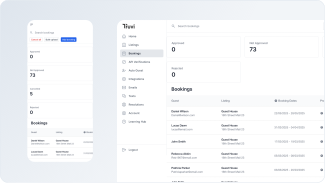
Truvi helps you add Damage Protection and Guest Screening to any OTA platform. You can also use Truvi to protect direct bookings on your own website. Truvi was designed for short- and mid-term rentals, making it a great match for Airbnb bookings and alternatives. It screens every guest to filter out risky bookings and protects your property with up to $1M in damage protection.
*https://skift.com/2025/03/14/short-term-rentals-airbnbs-dominance-and-bookings-gains-in-1-chart/
Ready to list on multiple platforms with confidence?
Protect your properties across all booking channels with Truvi’s Guest Screening and Damage Protection. Screen guests before they book and get up to $1M coverage for any damage that occurs.