

Finding short-term rental voices worth listening to is harder than it should be. Facebook groups are full of confident opinions. Podcasts are multiplying faster than anyone can keep up with. And somewhere in the middle of it all, expensive courses are promising to unlock passive income, targeting the hosts who can least afford to waste the money or the time.
We started Truvi because we saw what happens when operators make high-stakes decisions based on bad information. The Truvisionaries 2026 comes from the same place: a belief that people trying to build serious vacation rental businesses deserve better than noise.

How we chose them
We asked the industry to nominate the people they actually learn from. Over 300 people were put forward. 50 made the final list across operations, revenue management, direct bookings, design, marketing, guest experience, advocacy, and investment.
Not necessarily the most famous operators or the ones with the biggest platforms. These are the short-term rental influencers who show up every single week because they genuinely believe that when one host gets better, the industry gets better.
One interesting finding about the makeup of the list: 64% of the Truvisionaries are women, which sits in contrast to the fact that around two-thirds of conference speakers are men. Women are doing an enormous amount of the work of building, improving, and teaching in short-term rentals and receiving a fraction of the visibility.
This is just one indicator of the way this list reflects who’s providing value to real operators, not what the conference circuit suggests.
4 2026 Trends: What the most influential voices in STR agree on
After speaking with all 50 Truvisionaries, conducting hours of interviews, certain ideas came up consistently, to the point they started feeling like something close to a consensus. We’ve identified four key themes defined the conversations.
These themes also map onto what operators across the industry are seeing more broadly:
Platform independence: The short-term rental experts building resilient businesses have stopped waiting to be discovered
The hosts genuinely thriving in 2026 aren’t the ones whose strategy depends on platform algorithms favouring them this month. They are the ones who have built an identity that exists independently of any single platform.
Tracey Northcott built Tokyo Family Stays into a seven-figure business across 23 properties in Tokyo. Only 20 to 30% of her bookings come through Airbnb. She does not describe herself as an Airbnb host and considers that distinction important enough to defend.
Gil Chan spent years developing direct booking expertise after realising that having 90% of his revenue controlled by one platform put his mortgage at the mercy of any sudden policy change. Both made this point from hard experience rather than theory.
The argument runs deeper than distribution. Boris Pavlov, who built and sold an 800-unit property management company, points out that AI is quietly changing how guests discover where to stay. The hosts who build direct presence now will capture bookings that platforms currently own. His practical advice: add a FAQ section to your website with short answers written the way a guest would actually ask the questions, covering things like why the property works for families or what makes it different from nearby hotels. AI treats these as trust signals.
Gil Chan puts it plainly: he wants to see hosts recognised not as a commodity but as their own brand. The operators building resilient businesses in 2026 have already made that shift.
No room for average: The bar for what constitutes a good rental has risen, and it is still rising
Operators across the guide pushed back consistently on the idea that crowded markets are the problem. The more honest diagnosis is that most markets have plenty of bad rentals and genuine room for good ones.
Avery Carl built a portfolio of over 200 properties by focusing exclusively on vacation markets. When hosts tell her a market is saturated, she looks at the listings and finds wicker furniture from 2005 and properties that have not been updated in a decade. The competition is rarely as strong as it looks.
Amanda Stecker carved out a highly profitable niche in the Cotswolds around romantic stays for couples by identifying a gap most operators walked straight past.
Amanda pushes hosts to treat listings as living things rather than static shop windows, updating photos and copy seasonally to match what guests are actually looking for. Most hosts upload professional photos once and never touch them again. That gap is an opportunity.
Vivian Yip, who spent seven years at Apple before moving into short-term rentals, watches hobby operators struggle while professional hosts succeed. Her observation is uncomfortable but worth sitting with: guests are returning to hotels because they have been burned by subpar rentals. Quality photography, good linens, rigorous standards, and a genuine commitment to the experience are no longer differentiators. They are the entry point.
Smart, not cold: The most effective vacation rental influencers are using technology to create more room for human connection, not less
Almost every voice in this guide uses AI in some form. Almost all of them are equally clear about where it stops being useful. The technology should handle everything that does not require a person so that the moments that do require one are actually possible.
Brindy Bringhurst, who manages 29 properties across Arizona, rebuilt personal guest relationships deliberately after scaling caused her to lose them. She describes it honestly: she got to a point where she just knew the lock code worked and the place was clean. That’s not how you earn loyalty. So she rebuilt it intentionally, using automation to create headroom for genuine hospitality rather than letting it replace it.
Danica Smith, who came from hotel marketing before moving into vacation rentals, makes a point most hosts are not ready to hear: guests booking on Booking.com often cannot tell whether they are booking a hotel or a short-term rental. The hosts who recognise they are competing with hotels on guest experience, not just with other rentals on price, are the ones pulling ahead.
Marisa Grover scaled from one family property to 50 units and nearly burned out in the process. The systems she built exist not to remove the human element but to protect it, creating enough capacity that the moments requiring real attention actually get it.
Tell a better story: Storytelling has become a genuine competitive advantage, and most STR hosts are not using it
Annie Sloan started in short-term rentals before Airbnb existed, arbitraging her San Francisco apartment on Craigslist to fund travel. She now works with property managers across the industry and has watched a clear pattern emerge: the ones who consistently outperform their local markets are not necessarily running better properties. They are telling better stories.
The shift in how guests search for accommodation makes this more urgent than it has ever been. Guests are no longer scrolling through thirty Airbnb listings comparing features. They are asking AI tools where to propose within two hours of Chicago under a certain budget, or where to take a multi-generational family that needs ground-floor bedrooms. If your listing describes features rather than experiences, it does not answer those questions. One property manager Annie works with gets two and a half times the occupancy of local competitors because she tells a specific story about who the property is for.
Paul Anderson’s journey from a two-room guesthouse to the top-rated property in Oxford tells the same story. He ignored advice to add more doubles and instead targeted hospital visitors who needed affordable single rooms. That specificity, pursued consistently, compounded over time.
Jodi Bourne, who has stayed at over 70 vacation rentals as a paying guest, makes the practical version of this argument. When she asks hosts to show her their beach rental photos, most post generic sunset shots. She tells them to show a mum reading in a beach chair with her kids playing with dad in the background. Knowing exactly who you are talking to is not a marketing nicety. It is what separates a listing that converts from one that competes on price.
For the wider picture, our 2026 predictions piece covers what industry leaders are forecasting.
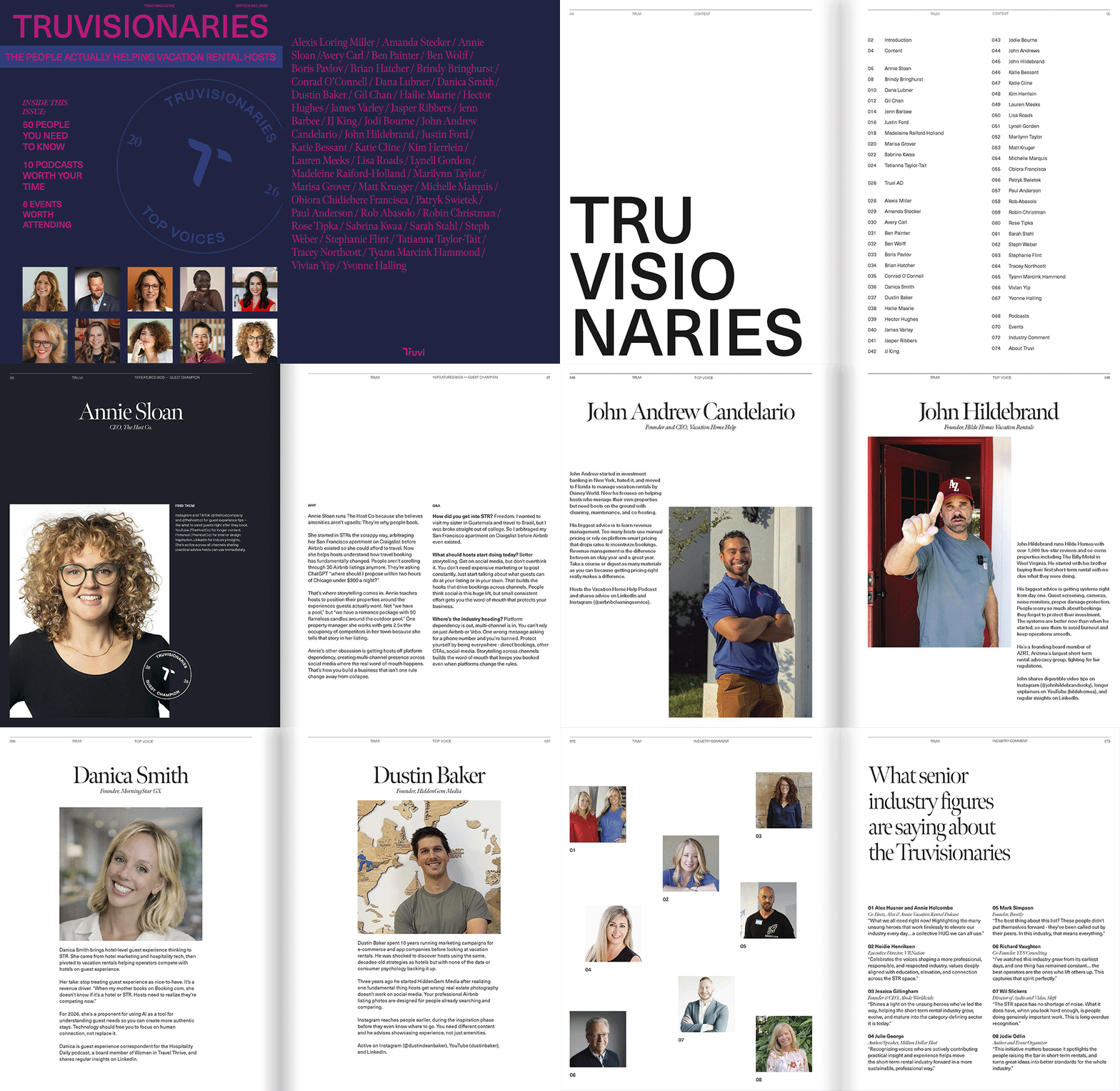
10 Short-term rental influencers worth following in 2026
Below is a sample of who you’ll find in the Truvisionaries 2026. Download the guide for full profiles on all 50, including how to find them and what they are working on right now.
Marisa Grover – Operations Guru
Marisa runs a 50-unit portfolio in five hours a week by building operational systems that work without her. She teaches other hosts how to do the same through her Systems Society membership and Hello and Welcome podcast.
Her advice: document processes as you do them, not after you have forgotten how things work. Most people hire without knowing what business they are actually building. Get the culture and the systems right first and scaling stops feeling like chaos.
Annie Sloan – Guest Champion
Annie is CEO of The Host Co and has been in short-term rentals since before Airbnb existed. She works with property managers across the industry on storytelling, guest experience, and building businesses that are not dependent on any single platform.
She’s watched a fundamental shift in how guests find accommodation. They’re no longer scrolling through thirty Airbnb listings. They’re asking AI tools where to propose within two hours of Chicago or where to take a family that needs ground-floor bedrooms. If your listing describes features rather than experiences, it doesn’t answer those questions. One property manager she works with gets two and a half times the occupancy of local competitors because she tells a more specific story about who the property is for.
Jenn Barbee – Industry Innovator
Jenn is co-founder of Destination Innovate and has spent 30 years working in tourism, most of it with destination marketing organisations before shifting focus to short-term rentals. She builds the relationships between hosts and the bodies that market and regulate their destinations.
She’s calculated that the misalignment between STR hosts and destination marketing organisations costs the industry $10 billion annually. Most hosts pay bed taxes and never hear from their tourism office. Her advice is straightforward: find out where your bed tax actually goes and introduce yourself. Access to destination research, marketing support, and a seat at the table where local decisions get made is often available to hosts who simply ask.
Madeleine Raiford-Holland – Growth Strategist
Madeleine is the founder of MHM Luxury Properties, runs 20 short-term rentals generating seven figures annually, and left her corporate career after proving the business could replace her income. Her background in affiliate marketing and brand partnerships sets her apart from most operators.
She earns significant additional revenue on top of nightly rates by making her properties shoppable. Guests can purchase the sheets, towels, and furnishings they experience during their stay through affiliate links. Her argument is that most hosts are leaving money on the table by thinking about revenue purely in terms of bookings.
Gil Chan – Direct Booker
Gil is CEO and founder of CraftedStays, which helps hosts build direct booking websites, and hosts the Booked Solid podcast. He figured out direct bookings after realising that 90% of his San Francisco rental revenue ran through a single platform, putting his mortgage at the mercy of any policy change.
His advice to hosts overwhelmed by direct bookings is to stop trying to do everything at once. Pick the one channel you are actually good at, do it consistently, and see what works. Year one, aim for 10% direct bookings. By year three you can realistically hit 40 to 60%. The hosts who fail at direct bookings usually fail because they tried to run email campaigns, social media, paid ads, and SEO simultaneously and stuck with none of them.
Sabrina Kwaa – Emerging Talent
Sabrina started with no money, both she and her husband working full time, after watching YouTube videos about Airbnb arbitrage. She now runs 50 units across the UK and Dubai and teaches hosts through property sourcing, setup, and management.
Her most consistent message is about pricing accountability. Most hosts turn on smart pricing and consider it done. She pushes further: track market trends, adjust seasonally, and if your property has been empty for days without a price change, you are making a decision by not making one. The hosts who blame market saturation for occupancy problems are often the ones who have stopped looking at what is actually in their control.
Brindy Bringhurst – Host Educator
Brindy left her job in 2020 to run Southwest Wanderlust full time and now manages 29 properties across Arizona with a team of four. She teaches hosts building co-hosting businesses or scaling from solo operations to teams, and has run free weekly Airbnb Ambassador webinars watched by nearly 5,000 students over four years.
Her argument about technology is precise. Automate everything that does not require a person so that the moments that do require one are actually possible. The risk of scaling is not the workload. It is losing the guest relationships that drive loyalty. She rebuilt those relationships deliberately after scaling caused her to lose them, and teaches other hosts to treat that balance as a strategic choice rather than an afterthought.
Tatianna Taylor-Tait – Design Genius
Tatianna is an award-winning interior designer and co-founder of The Level Up Your Listing Summit. She has spent six years evolving from attending industry events to hosting her own, and works with hosts on the intersection of design, psychology, and guest experience.
Her insight is that great design is necessary but not sufficient. What separates properties that thrive is the guest journey: every interaction point from the moment someone sees your listing online through to checkout and beyond. Most hosts think about the property. The ones outperforming their markets think about the experience of arriving at it, waking up in it, and leaving it.
Justin Ford – Community Champion
Justin is Director of Safety and Certification Programs at Breezeway and is credited with saving over 50 lives through his safety education work in the industry. He came from firefighting before stumbling into short-term rentals in 1997, which gives him a perspective on risk that most hosts have never encountered.
The most dangerous moment for a guest is not during their stay but the first hour after arrival, before they know the layout, usually tired after a long journey. Most hosts have not thought about that. He is also tracking the rise of lithium battery fires from guests bringing e-bikes and EVs to properties, a hazard that did not exist five years ago.
Dana Lubner – Host Advocate
Dana is Director of Community Development at Rent Responsibly and co-founded Mile High Hosts after helping organise the host response when Denver moved aggressively to regulate short-term rentals in 2019. She now supports STR alliances across the US.
Her warning to hosts who think advocacy is not their problem is specific: regulatory battles follow patterns you can spot before they reach your market, but by the time they feel urgent it is usually too late to build the community presence that actually moves the needle. The hosts still operating in five years will be the ones who showed up before the crisis.
Meet all 50 short-term rental influencers
Full profiles, how to find them, and what they are working on in 2026. Free from Truvi.
The complete guide to short-term rental influencers in 2026
There are no shortcuts in here, and no one promising them. What there is, across 50 profiles, 10 podcast recommendations, and six industry events worth attending, is the accumulated experience of people who have built real businesses and are willing to share what they have learned.
You do not need a magic formula when you have the right people in your corner.
[Download The Truvisionaries 2026 now]
The Truvisionaries 2026 is a free resource from Truvi, which provides guest screening and damage protection for vacation rental property managers across every booking channel. The guide is based on open community nominations from across the short-term rental industry.